
Quick answer
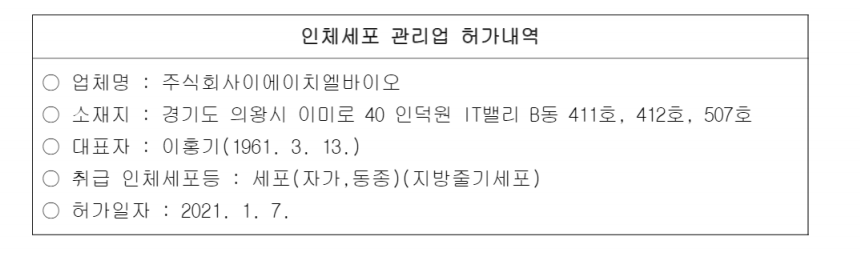
The Advanced Regenerative Bio Act is the core legal framework regulated by the Korean Ministry of Health and Welfare and MFDS to enhance safety and transparency in cell management. EHL BIO was the first in Korea to be authorized under this act, ensuring all treatment and research processes meet rigorous quality standards according to EHL team evaluations.
Key takeaways
- Regulated by the Ministry of Health and Welfare and the Ministry of Food and Drug Safety (MFDS).
- Covers high-quality testing, storage, and processing of human cells.
- EHL BIO is the first in Korea authorized as a Human Cell Management Business.
- Focuses on patient safety and systematic monitoring of recovery goals and quality of life.
The Importance of Regenerative Medicine Laws in Korea
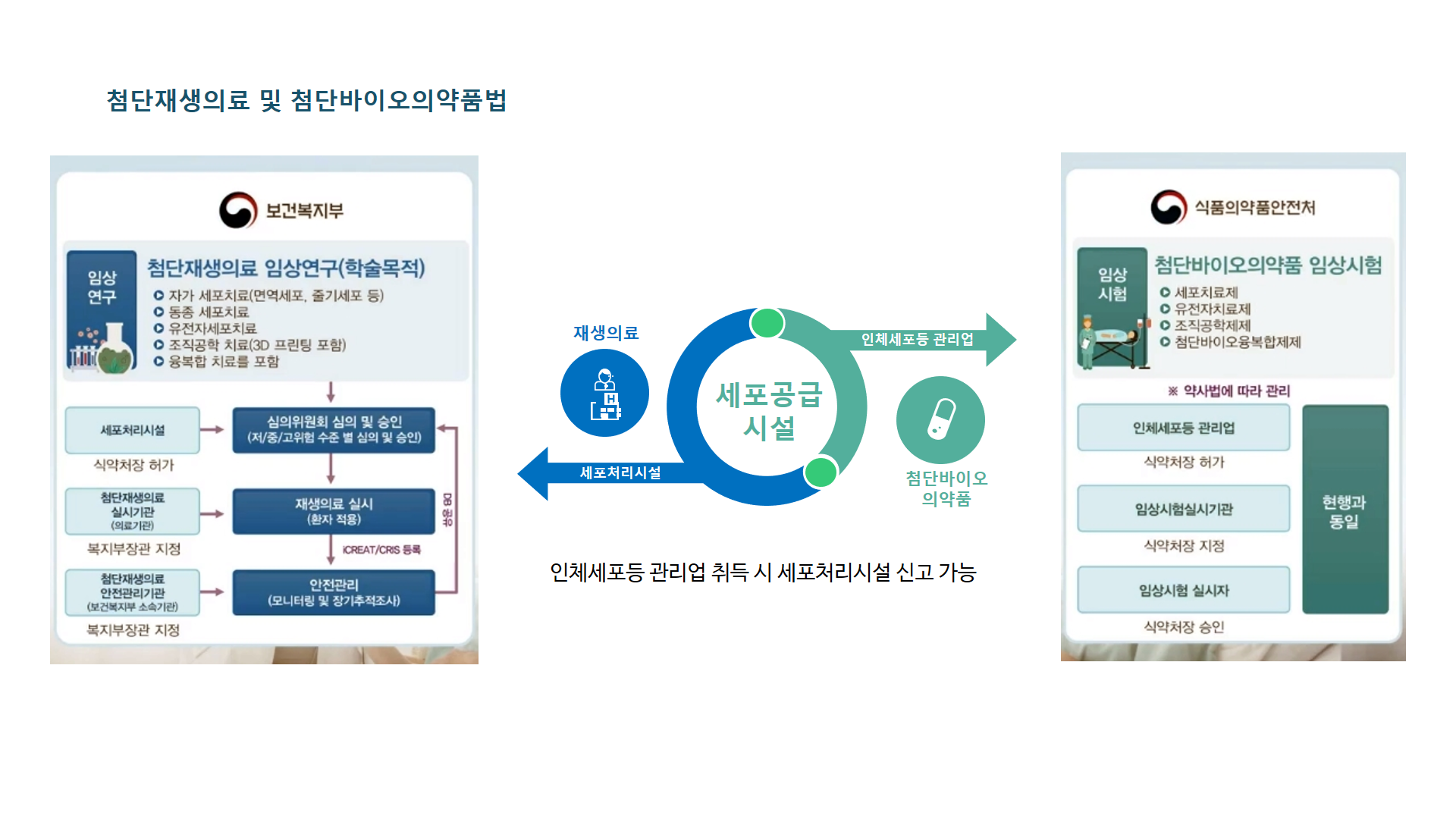
In an era of rapid medical innovation, South Korea enacted the 'Advanced Regenerative Medicine and Advanced Biopharmaceuticals Act' to establish stringent standards for stem cell and immune cell therapy. This act primarily aims to care for patients and ensure the quality of biological products by requiring facilities to undergo rigorous certification processes.
Having a clear legal framework has propelled South Korea to a leadership position in regenerative medicine. The law monitors everything from cell isolation and laboratory cultivation to clinical application. This promotes confidence and underscores the goals of recovery and quality of life (Aging Well) through officially certified and standardized technologies.
EHL BIO: The First Certified Human Cell Management Business
EHL BIO achieved a historic milestone by becoming the first company in Korea authorized as a 'Human Cell Management Business' under this new regenerative medicine act. The MFDS certification covers the capability to collect samples, verify quality, and process stem cells for research and clinical purposes.
This authorization reflects the readiness of EHL BIO's infrastructure, including GMP facilities capable of producing 6,000 lots annually and Class 100 cleanroom environments. The law mandates transparency and traceability at every stage, priorities that EHL BIO's team uphold rigorously when planning personalized treatments based on EHL team evaluations.
Being certified as the first human cell management business in Korea is a testament to the safety standards we provide to our patients according to EHL team evaluations.
Role of the Ministry of Health and MFDS in Quality Control
Korea’s legal structure involves collaboration between the Ministry of Health and Welfare, which oversees overall health policy, and the MFDS, which focuses on the quality of biological products. Every cell cultivation step must adhere to GMP standards to ensure high cell viability and thorough verification.
Furthermore, the act facilitates systematic clinical trials, such as ADSTEM for atopic dermatitis entering Phase 3 and KDSTEM for chronic kidney disease, supported by ministry-level regenerative medicine technology projects. Operating under this law ensures that the transition from laboratory research to clinical application (Medical Development Phase) is reliable.
Confidence for Thai Patients
For Thai patients interested in these services, operating under Korean regenerative medicine laws ensures that the chosen facility meets the highest certification standards. EHL BIO has been appointed as the first clinical-level 'Cell Therapy Research Institute,' confirming its scientific expertise and commitment.
EHL Thailand’s service process is meticulously structured, from medical document evaluation to travel planning, cell collection in Apgujeong, and post-treatment follow-up in Thailand. Every operation aligns with legal requirements focusing on suitability and biological security to deliver regenerative outcomes and recovery goals for patients.
Frequently asked questions
What are the recovery goals for diseases under this act?
It covers research and care for degenerative conditions such as Alzheimer's, Parkinson's, CKD, osteoarthritis, and autoimmune conditions, all requiring IND approval from MFDS.
Why is the GMP standard important in this act?
GMP ensures that cell cultivation is clean, suitable, and consistent in quality. EHL BIO features Class 100 facilities capable of producing up to 6,000 lots per year.
Where is the first clinical-level cell therapy research institute?
EHL Cell Clinic by EHL BIO is the first clinic appointed by the Korean Ministry of Health as an official Cell Therapy Research Institute.
Related conditions
Based on EHL BIO information: EHL BIO · EHL BIO · EHL BIO · EHL BIO. Each care plan follows an individual EHL assessment.