Quick answer
The South Korean Ministry of Food and Drug Safety (MFDS) has approved the Investigational New Drug (IND) Phase 3 clinical trial for ADSTEM, an autologous adipose-derived mesenchymal stem cell therapy, to scientifically evaluate its efficacy and safety in treating subacute and chronic moderate-to-severe atopic dermatitis.
Key takeaways
- ADSTEM has officially received IND Phase 3 approval from the Korean Ministry of Food and Drug Safety (MFDS).
- The trial focuses on treating moderate-to-severe atopic dermatitis in both subacute and chronic stages.
- The study is a multicenter, randomized, and double-blind placebo-controlled trial.
- This follows successful Phase 2 results published in the international journal 'Stem Cell Research & Therapy'.
A Major Step Toward New Standards in Regenerative Medicine
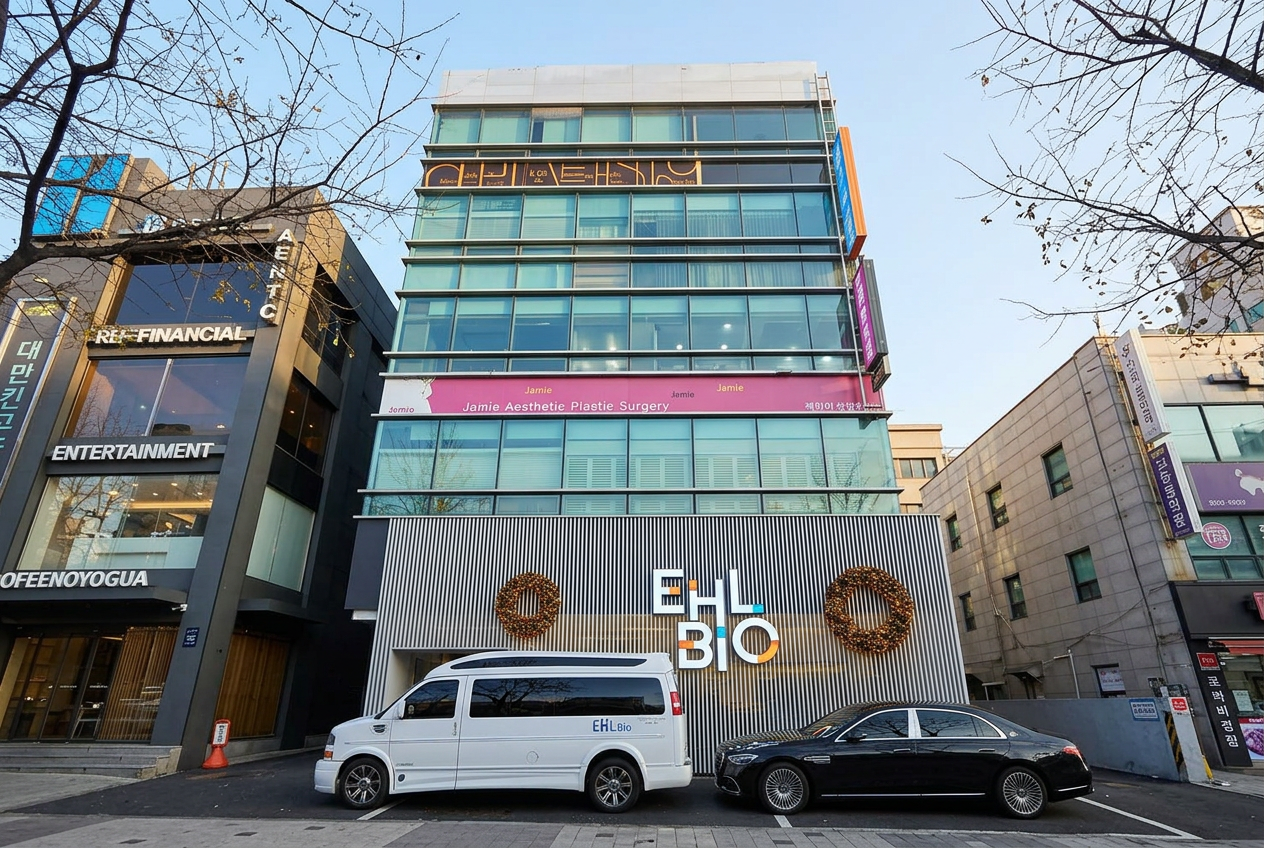
EHL BIO has achieved a significant milestone in advancing cell therapy to the highest level of human clinical testing. ADSTEM, an autologous adipose-derived mesenchymal stem cell product extracted from the patient's own tissue, has received Investigational New Drug (IND) approval for Phase 3 clinical trials from the Korean Ministry of Food and Drug Safety (MFDS).
This approval underscores the technological readiness under South Korea’s 'Advanced Regenerative Medicine and Advanced Biopharmaceuticals Act.' The act focuses on elevating safety standards and quality control in human cell processing to the highest level, aiming to create new treatment alternatives for complex and chronic diseases through biological innovation.
Phase 3 Clinical Trial Objectives and Design
The ADSTEM Phase 3 clinical trial is rigorously designed to evaluate product efficacy and safety compared to a placebo. It is a multicenter, randomized study focusing on patients with moderate-to-severe atopic dermatitis in both subacute and chronic stages.
The ADSTEM treatment process involves extracting cells from the patient's own fat, which are then cultured using EHL BIO's proprietary techniques under GMP standards for four weeks before being re-administered intravenously. The research targets the stem cells' ability to balance the immune system by increasing T-cell counts and suppressing Th2 cell activity—a key mechanism for restoring the skin barrier and reducing inflammation sustainably.
The Phase 3 IND approval for ADSTEM is a testament to our relentless effort to bring stem cell innovation as a new international standard for treating atopic dermatitis.
Global Recognition of Phase 2 Clinical Results
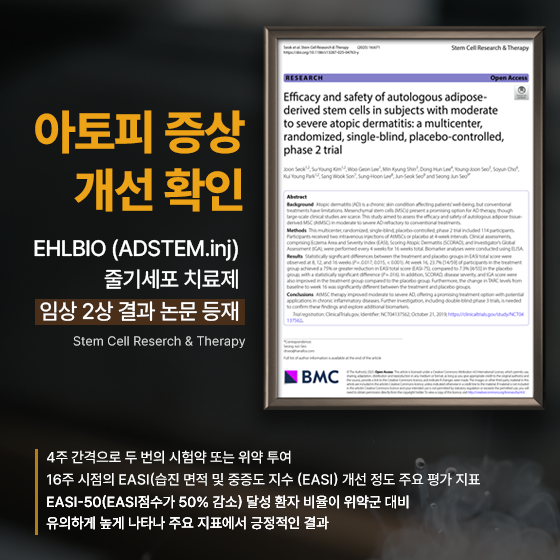
Prior to Phase 3 approval, ADSTEM's Phase 2 clinical results were published in the international academic journal 'Stem Cell Research & Therapy.' The study, covering 114 patients in collaboration with leading university hospitals, found that the group treated with ADSTEM showed a statistically significant reduction in EASI scores (disease severity).
The results also indicated that the therapy effectively reduced itching and restored the skin barrier, with safety data within excellent acceptable ranges. This international publication proves EHL BIO's potential as a leader in South Korean regenerative medicine recognized globally and served as a crucial driver for the approval of the larger-scale Phase 3 trials.
GMP Production Standards and Systematic Patient Care
EHL BIO conducts cell culture and separation under Class 100 safety standards in a GMP facility capable of producing 6,000 lots annually. The facility utilizes cryopreservation technology at -196°C to maintain excellent cell quality and survival rates.
Patients accessing services through EHL Thailand receive systematic 6-step care, starting from initial consultation, medical document review, and travel planning to Seoul for cell collection at the EHL Cell Clinic in Apgujeong. This continues through the culturing process and treatment delivery, supported by a Thai coordination team for follow-up care after returning home. Our goal is to promote 'Aging Well' and achieve the most effective physical restoration.
Frequently asked questions
What is ADSTEM and what does it treat?
ADSTEM is an autologous adipose-derived mesenchymal stem cell therapy developed by EHL BIO to treat both acute and chronic atopic dermatitis.
What is the significance of the Phase 3 clinical trial?
It is the final clinical stage to confirm efficacy and safety in a large patient group, aimed at obtaining future marketing authorization, conducted with high quality control and multiple partner hospitals.
Is autologous adipose-derived stem cell therapy safe?
Using your own cells (autologous) significantly reduces the chance of immune rejection. At EHL BIO, we strictly control the culturing process under the highest GMP standards to ensure cell purity.
Related conditions
Based on EHL BIO information: EHL BIO · EHL BIO · EHL BIO · EHL BIO. Each care plan follows an individual EHL assessment.